FBT Changes in the 2026 Budget

Angela Hodges • 17 June 2026

A More Practical Road Ahead?

The FBT proposals tabled in 2025 led to significant backlash against what many called “Ute Tax 2.0”. The updated proposals included in Budget 2026 appear to be a genuine attempt to meet those concerns, while also simplifying the FBT motor vehicle rules.


The changes also recognise that vehicles, work patterns and technology have moved on significantly since the FBT rules were first introduced in 1985.


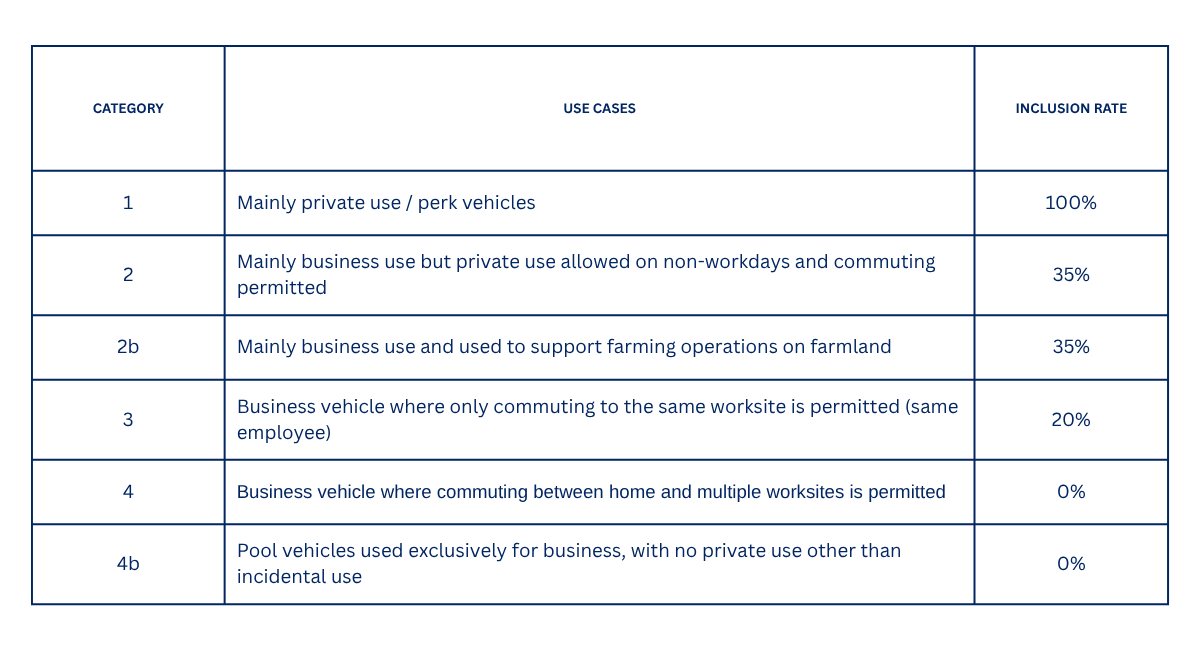
The key proposal is to replace the current day-counting approach with a category-based regime from 1 April 2027. Instead of tracking the exact number of days a vehicle is available for private use, employers would classify each vehicle based on its expected use and apply a set “inclusion rate” when calculating FBT.


The proposed categories are:
The Work-Related Vehicle Exemption Is Going - But Not Really

The work-related vehicle exemption is still going. However, the new Category 2 treatment is designed to produce a similar outcome for many work vehicles that are currently treated as exempt during the working week, but subject to FBT on weekends, public holidays, annual leave days or rostered days off.


The new 35% category is specifically designed to reflect this common usage pattern. Inland Revenue’s own example makes this clear. A branded ute used for work during the week, with private use allowed on weekends and public holidays, would fall into Category 2 and be subject to FBT at a 35% inclusion rate. Inland Revenue compares this with the current rules, where FBT would often be paid on Fridays, Saturdays and Sundays, equating to roughly 40% of the quarter.


A Shift Away From Utes

One of the more welcome aspects of the reforms is that concessionary treatment is no longer tied to a particular type of vehicle. This should reduce any distortion created by the current rules, where businesses may have chosen utes for tax reasons rather than operational need.


The revised approach focuses more on how the vehicle is actually used. Branding, business use, value, restrictions on private use, and whether the vehicle is shared will all be relevant. A “normal car” may qualify for lower FBT rates if it is genuinely used for business purposes.


Better Treatment for Hybrids and Electric Vehicles

The current FBT rules have often produced odd outcomes for businesses seeking to transition to lower-emission fleets.

A hybrid or electric car or SUV used predominantly for business purposes generally could not access the same concessions available to a sign-written ute being used in a very similar manner. This created a tax disadvantage for businesses attempting to move toward lower-emission vehicles.


The Budget proposals address this issue in two ways.

  • First, concessionary treatment is no longer restricted to particular vehicle types.
  • Second, the proposals introduce different valuation rates depending on fuel type:
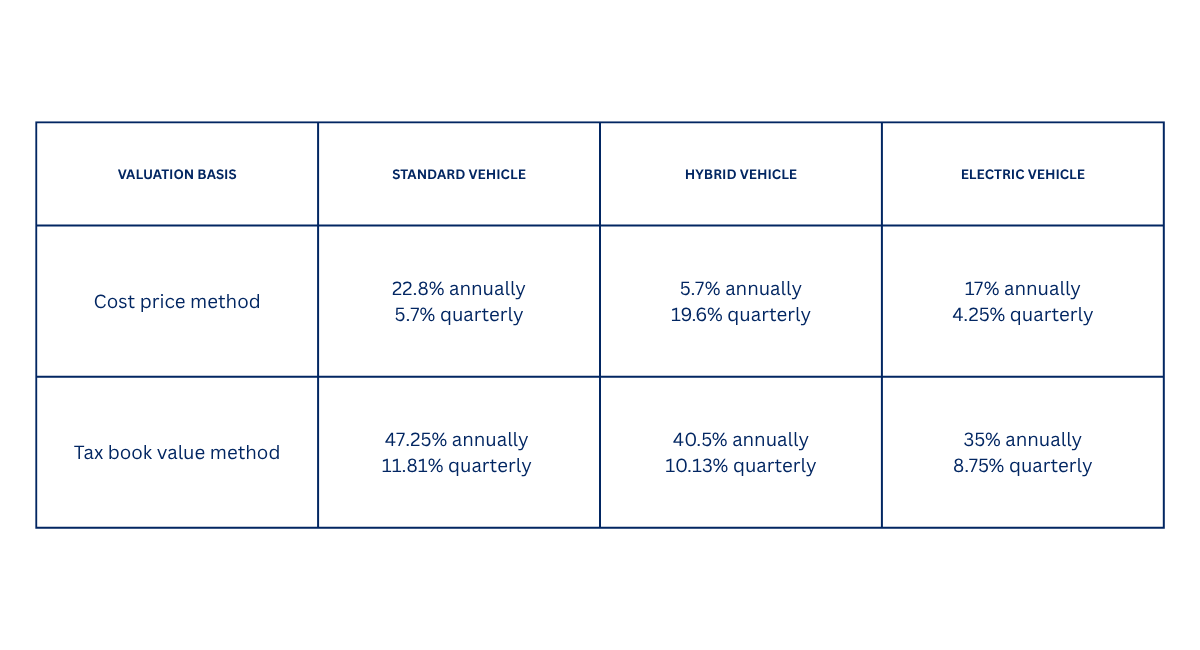
These rates include a 12.5% discount to reflect periods where the vehicle may not be available for private use, for example due to mechanical issues. The tax book value rates also assume Investment Boost has been claimed.


The new rates are higher than the current standard rates for ICE vehicles, but discounted rates apply for hybrids and EVs to reflect lower operating costs. 


Our thoughts

There will still be opposition to the removal of the work-related vehicle exemption. However, much of that opposition is likely driven by the misunderstanding that work-related vehicles were fully exempt from FBT. They were not.


The current regime requires careful monitoring of vehicle availability, restrictions on private use, exempt days and logbooks. In practice, that has made compliance difficult and inconsistent.


The options were either for Inland Revenue to enforce the current rules more strictly (and a sign-written ute towing a boat was always going to be easy to spot) or to modernise the regime so it better reflects how vehicles are actually used.


The updated proposals appear to strike a more sensible balance. 


Businesses should start reviewing their vehicle fleets now. In particular, employers will need to consider which category each vehicle is likely to fall into, whether branding is required, what private use restrictions are in place, and whether employment agreements and vehicle policies align with the new rules.


If you'd like to discuss how the proposed FBT changes could affect your business, please get in touch.


Disclaimer

The information provided in this article is general in nature and does not constitute personalised tax advice. The proposed FBT reforms are subject to legislation and may change before implementation. You should seek professional advice tailored to your specific circumstances before making any business or tax decisions based on this content.


by Angela Hodges 27 May 2026
How Land Owning Structures Become “Accidentally Tainted” Over Time
by Angela Hodges 23 April 2026
Some Common Sense for Taxpayers
Laptop displaying bar graph on a desk with financial documents, calculator, books, and an alarm clock.
by Angela Hodges 8 February 2026
How To Prepare For Your Year-End Accounting.
by Angela Hodges 27 January 2026
The Government has recently released a proposal that would fundamentally change how shareholder loans are taxed in New Zealand (Officials’ Issues Paper Improving taxation of loans made by companies to shareholders). At its core, the proposal could turn loans from a company to shareholders into a deemed dividend. Broadly, where a company advances funds to a shareholder and that loan is not repaid within a specified period, the outstanding balance would be treated as taxable income to the shareholder, most likely as a deemed dividend. This would apply to new loans made on or after 4 December 2025, with a proposed $50,000 de minimis per company (not per loan). This would mean that, for example, money taken out of a company by shareholders and left in an overdrawn current account could be treated as taxable income for the shareholders. Alongside this, Inland Revenue proposes a separate rule for companies that are removed from the Companies Register. Any shareholder loan still outstanding at the time of removal would be taxed at that point, on the basis that these loans are frequently never repaid and Inland Revenue has no practical way to recover tax once the company no longer exists. The stated problem: large loans that are never repaid Inland Revenue’s explanation for these changes relies on the concern that shareholders are taking funds out of the company, not declaring dividends, and not paying the funds back. The concern is not ordinary short-term lending. It is large shareholder loan balances that: build up over many years, fund private consumption, are never realistically repaid, and are often abandoned when a company is liquidated or removed from the register. From Inland Revenue’s perspective, these arrangements allow shareholders to enjoy company profits without ever paying shareholder-level tax, while IRD has (apparently) no effective recovery mechanism once the company disappears. That concern is understandable. However, the difficulty lies in how far the proposed solution strays from that original framing and the practical reality of how to implement the proposal. The $50,000 de minimis tells a different story Despite repeated references to very large balances and long-term non-repayment, the proposed rules would apply once shareholder loans exceed a $50,000 de minimis. This threshold applies to the company, so it will include all shareholder loans, not on a loan-by-loan basis. That threshold is not particularly high in the context of owner-managed businesses and does little to confine the rules to the behaviour Inland Revenue says it is targeting. In practice, the proposals could capture many ordinary commercial arrangements that bear little resemblance to the “never repaid” loans highlighted in IRD’s communications. New Zealand’s deliberate departure from Australia This tension becomes clearer when compared with Australia. Australia is cited as a model for taxing shareholder loans, but the Australian regime includes a critical safeguard: a commercial loan exemption. Where a shareholder loan is structured and documented on commercial terms, it is not treated as a disguised (or deemed) dividend. Inland Revenue has rejected adopting a similar exemption for New Zealand. The Issues Paper states that a commercial loan carve-out would be too easy to manipulate and would undermine the integrity of the regime. That decision has far-reaching consequences. It means that even a genuinely commercial loan, indistinguishable from third-party debt, remains exposed to the proposed deemed dividend rules purely because the borrower is also a shareholder. When a “loan” is taxed like income but still behaves like a loan Rejecting a commercial loan exemption also creates a series of unresolved technical and practical issues. If a shareholder loan is deemed to be income for tax purposes, but continues to exist legally, several questions follow: What happens to interest? Is this still taxable income for the company? Remember that, for tax purposes, the loan has been repaid via a deemed dividend. How are repayments treated? If the shareholder later repays the principal, should there be a deduction available to the shareholder for that repayment? i.e., to reverse the tax impact of the deemed dividend? What about future dividends? At this stage, the deemed dividend appears to be a tax fiction. The retained earnings remain in the company for accounting purposes. Unless the deemed dividend is matched by a reduction in retained earnings or tracked some other way, the same underlying profits could be distributed again later as an actual dividend — and taxed again in the ordinary way. What this would mean in practice From a practical perspective, the proposals would mean that overdrawn shareholder current accounts could be treated as taxable income for the shareholder, rather than simply being viewed as loans that remain outstanding. Inland Revenue has framed the changes around situations where large shareholder loans are not repaid, and shareholder-level tax is not ultimately collected. The proposed rules would apply more broadly than those scenarios, including to loans that are documented, interest-bearing, and intended to be repaid. As the proposals currently stand, further guidance will be needed on how deemed income amounts interact with ongoing loan balances, interest payments, repayments of principal, and future dividends funded from the same company profits. These interactions will be important in determining the overall tax outcome. If you would like to understand how these proposed changes could affect your business or existing shareholder loan arrangements, please get in touch with the team at NZ Tax Desk.  Disclaimer: The information provided in this article is general in nature and does not constitute personalised tax advice. You should consult with a qualified tax adviser familiar with both New Zealand tax rules and any relevant overseas tax systems before making decisions based on this content.

by Angela Hodges 26 November 2025
RDTI delivers billions in value – but many firms still miss out.
by Angela Hodges 23 October 2025
Why You Can Now Trigger Tax Without Exercising
by Angela Hodges 24 September 2025
What you need to know for new residents
by Angela Hodges 29 August 2025
The recently introduced Tax Bill includes significant tax changes for remote workers, including surprising tax reforms granting digital nomads a brand-new tax concession intended to reflect the visitor visa conditions. A New Tax Exemption for “Non Resident Visitors” Currently the NZ tax residency rules are not aligned with immigration visa conditions, which has led to unexpected tax consequences for many visitors. Individuals who spend 183 days or more in NZ may be deemed tax resident from the first day of their stay. Likewise, salary earned from a non-resident employer could be taxable in NZ, without a foreign tax credit recognising tax paid offshore. We have worked with many individuals who have had significant and unexpected tax liabilities because of these rules. The Proposal A pivotal change is the introduction of a new “non-resident visitor” tax status which will provide an exemption from the 183-day test. Under the proposed law, individuals who meet the following requirements should not become NZ tax residents, despite their extended stay: • are in NZ for 275 days or fewer within any 18 month period, • were not NZ tax residents or transitional residents immediately before arrival, • are lawfully present, • are not receiving a family scheme entitlement, and • remain tax residents of a foreign jurisdiction that imposes an income tax substantially similar to NZ’s. This exemption lifts them out of the 183-day rule that would traditionally trigger tax residency. Key Conditions: • Work must be exclusively for overseas clients or employers. • No on-site services to NZ individuals/businesses. • Work must not require the person to be physically present in NZ. • Must not undertake promotional work in NZ for NZ businesses. Interestingly, the carve-out for work that requires a person to be physically present in NZ uses an example of an influencer. The influencer is required to be physically present in NZ for her work, for example, a travel blogger. Such a person would not qualify for the exemption. Income Exemptions Clarified Under the proposed rules, certain categories of income are explicitly exempt for non-resident visitors: • Personal or professional services income earned while in NZ, provided it meets the non-resident visitor criteria. • Business income earned by a non-resident business or self-employed person that might otherwise be sourced in NZ due to a visitor’s presence is also exempt, unless it arises from a permanent establishment. • Income earned by a public entertainer is not covered by the proposed tax exemptions. Importantly, the activities of a non-resident visitor will be disregarded when determining whether a foreign entity has a permanent establishment in NZ. These proposals should ensure that remote work for foreign clients doesn’t inadvertently trigger NZ tax or permanent establishment issues. GST Registration Becomes Optional The Bill also proposes making GST registration optional for remote workers providing zero-rated services to overseas clients, even if their (zero-rated) turnover exceeds NZD 60,000. Looking Ahead If enacted from 1 April 2026, these proposals represent a significant shift in how New Zealand taxes visiting individuals and their non-resident employers. By aligning the tax rules with the conditions of visitor visas, the reforms introduce a welcome simplification and surprising tax relief. If you’re a remote worker, digital nomad, or employer wanting to understand how these changes may affect you, get in touch. Disclaimer: The information provided in this article is general in nature and does not constitute personalised tax advice. You should consult with a qualified tax adviser familiar with both US and NZ tax systems before making any decisions based on this content. 
by Angela Hodges 28 July 2025
Double Cab Utes, Perk Vehicles, and the End of the Exemption Era
A person is drawing a red circle around the number 30 on a calendar
by Angela Hodges 4 June 2025
The Deadline is Approaching for FY25 General Approval Applications